Home-scale circular living

Waste materials can become useful systems.

A practical Terra Ideas file for turning ordinary household waste into small products, garden tools, lighting aids and learning prototypes. These are not industrial recycling solutions; they are low-cost home recipes that make material cycles visible.

DIY RecyclingHome LabBeginner FriendlyPublic DIY Library
Concept purpose

Small actions, visible transformation.

This public DIY library is designed as a recipe-style introduction to domestic upcycling. The goal is not to replace municipal recycling or industrial processing; the goal is to show how waste paper, bottles, jars, cans, fabric, food scraps, pallets, crates, corks, CDs, denim and old tires can become useful objects at home.

Terra Ideas disclosure:

All applications below are educational household projects. Cutting tools, fire, composting and reused tire projects require adult supervision, local safety awareness and basic hygiene. Drinking-water use is intentionally excluded.

Recipe cards

Twenty household waste projects

Visuals are linked with the final Terra Ideas naming format: assets/terra_recycle_01.png through assets/terra_recycle_20.png. Projects 15–20 continue the same public DIY format.

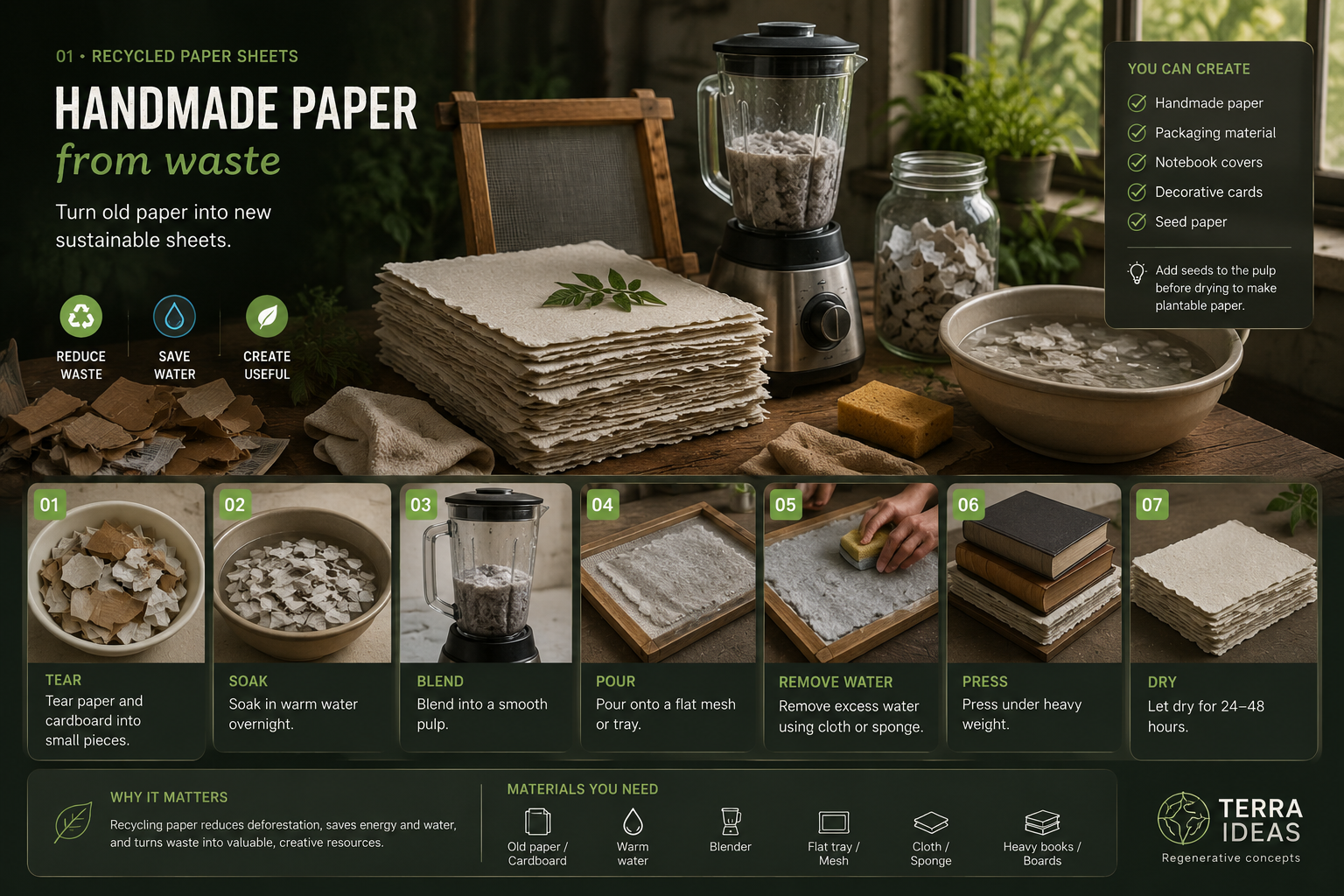
Recycled paper sheets from household waste infographic
Project 01

Recycled paper sheets

Turn cardboard, old notebooks and office paper into handmade sheets for cards, labels or seed paper.

assets/terra_recycle_01.png
waste paperwarm watertrayclothweight
Recipe
  1. Tear paper into small pieces.
  2. Soak overnight in warm water.
  3. Blend or knead into pulp.
  4. Spread thinly on mesh or cloth.
  5. Press water out, then dry for 24–48 hours.
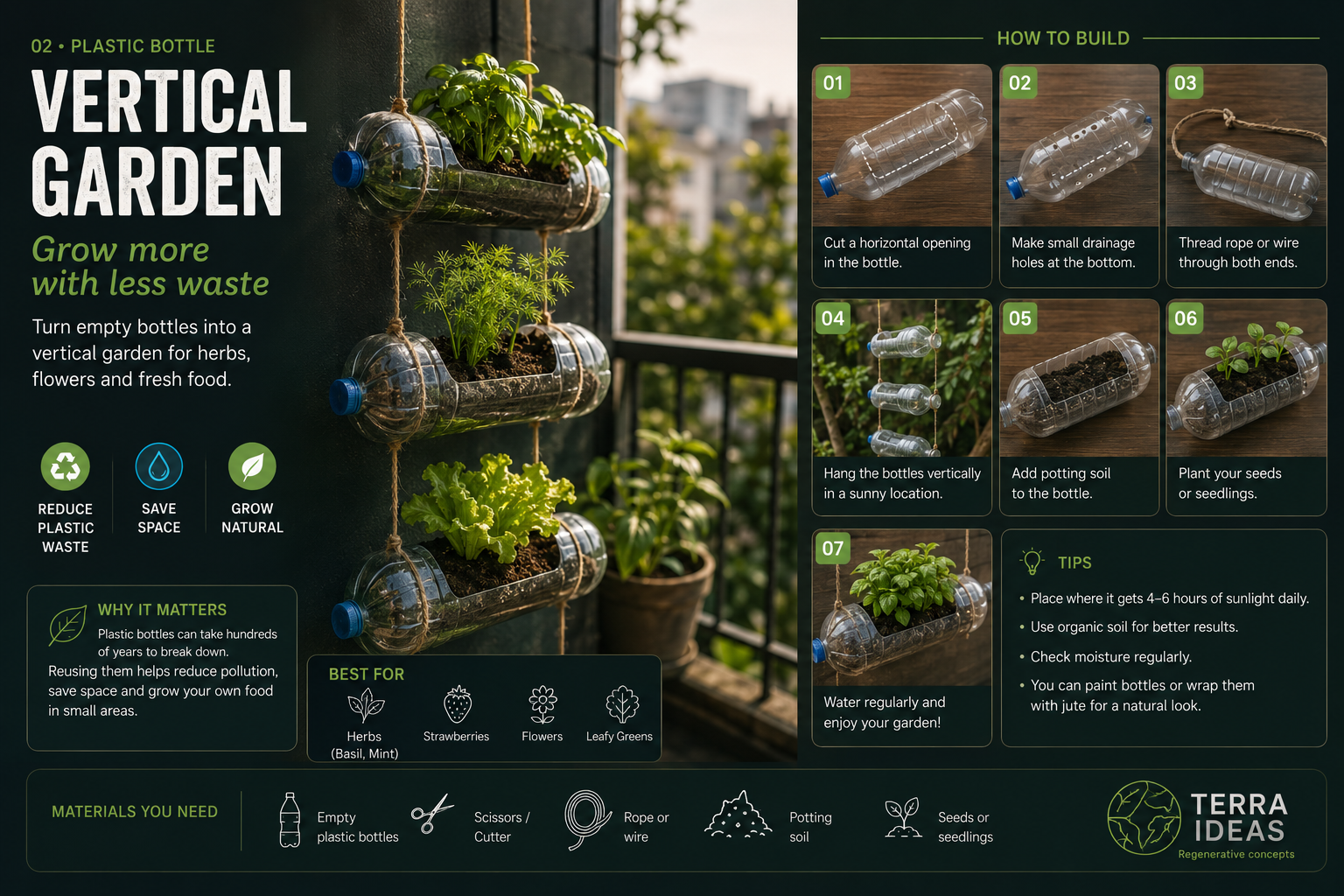
Plastic bottle vertical garden infographic
Project 02

Plastic bottle vertical garden

Use PET bottles as hanging modules for herbs, flowers or balcony farming.

assets/terra_recycle_02.png
PET bottlesropesoilseedsscissors
Recipe
  1. Cut a horizontal plant opening.
  2. Add small drainage holes underneath.
  3. Thread rope through both ends.
  4. Fill with soil and seeds.
  5. Hang near sunlight and water lightly.
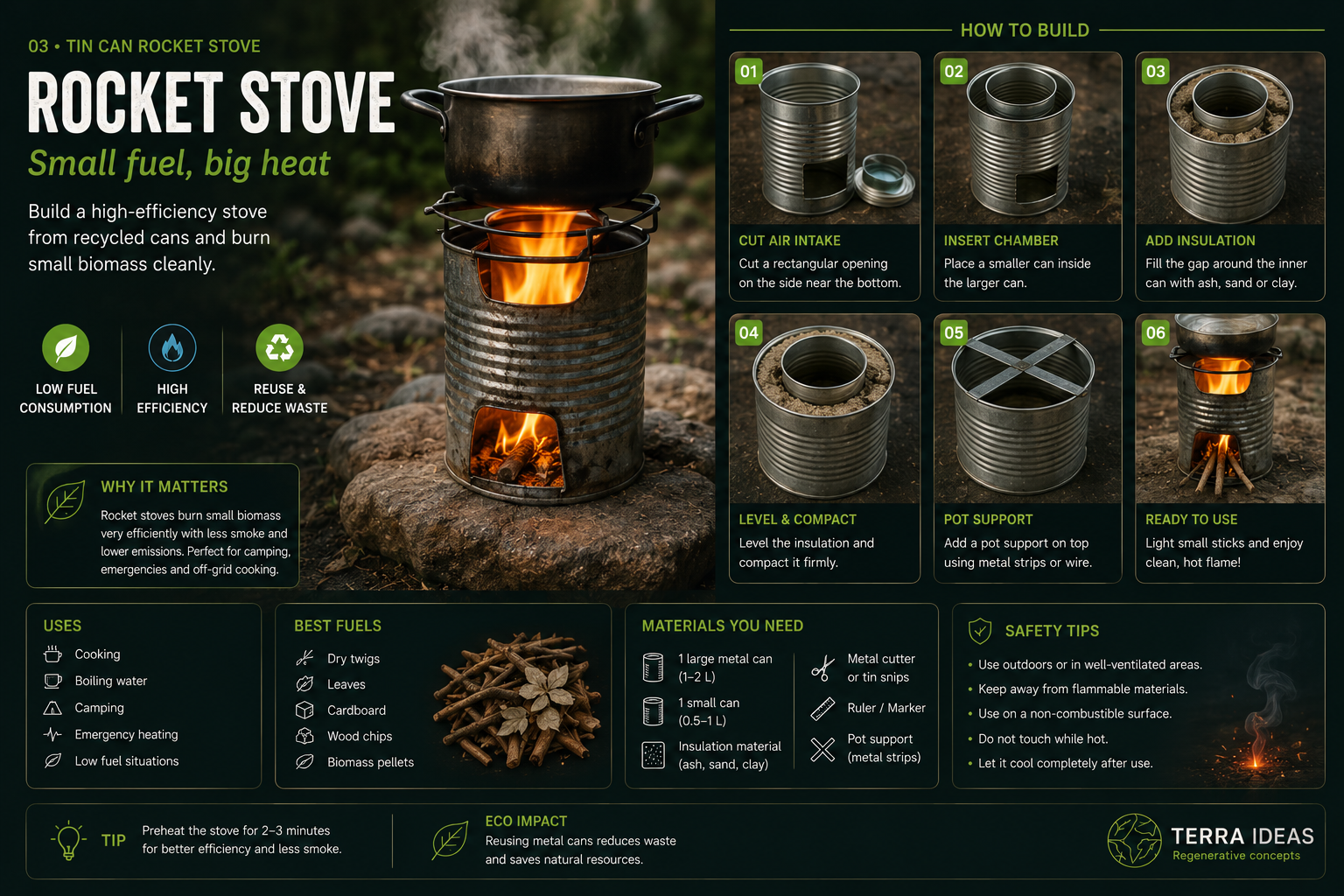
Tin can rocket stove infographic
Project 03

Tin can rocket stove demo

A small outdoor stove concept showing efficient combustion from cans and dry biomass.

assets/terra_recycle_03.png
metal canssand/claymetal cutterdry twigsgloves
Recipe
  1. Cut an intake opening in the outer can.
  2. Insert the smaller combustion chamber.
  3. Insulate the gap with sand, ash or clay.
  4. Add a stable top support.
  5. Test only outdoors, away from flammable materials.
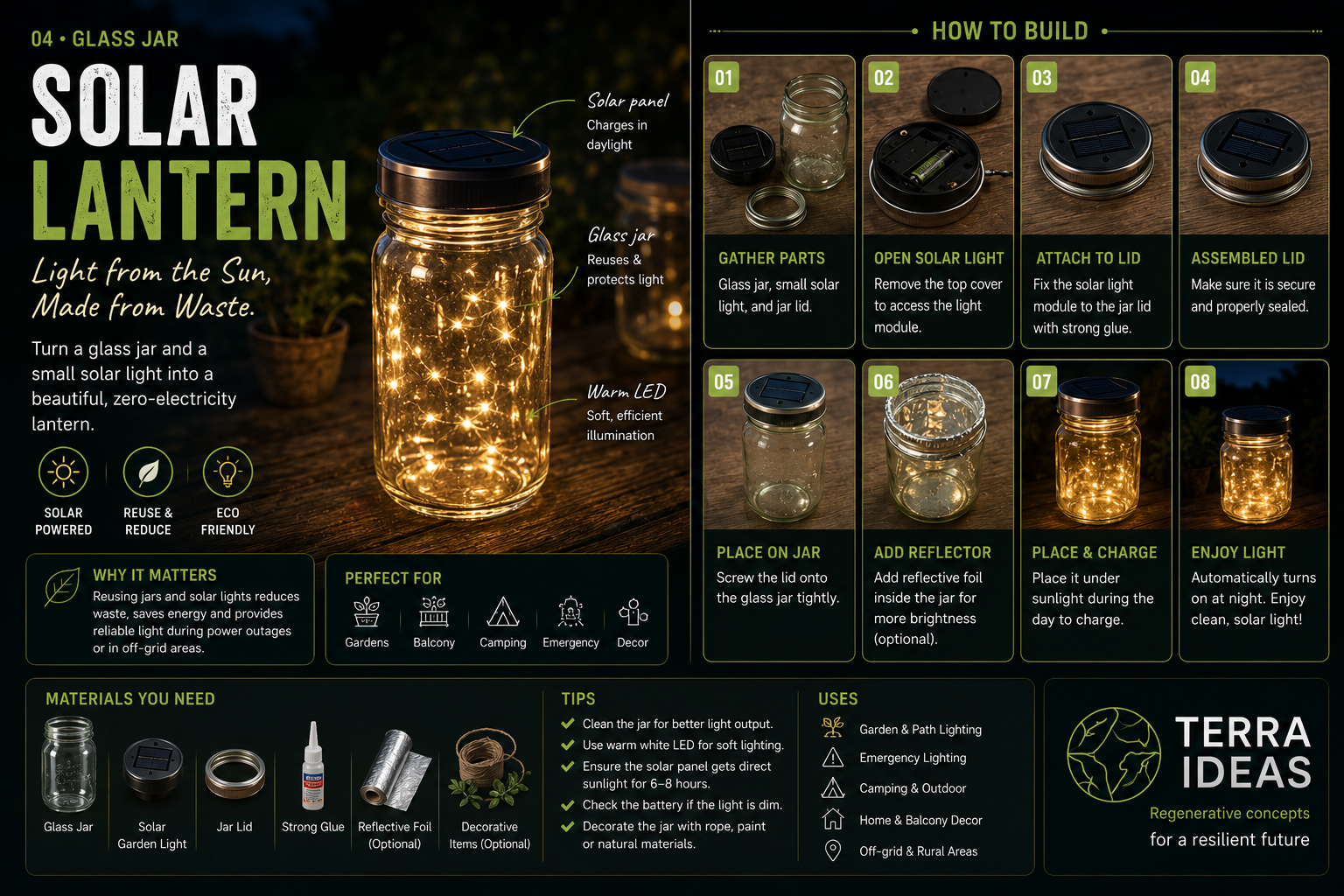
Glass jar solar lantern infographic
Project 04

Glass jar solar lantern

Convert a used jar and a small solar garden light into a balcony or emergency lantern.

assets/terra_recycle_04.png
glass jarsolar lightlidgluefoil optional
Recipe
  1. Clean and dry the jar.
  2. Remove the solar light head.
  3. Mount it onto the lid.
  4. Add reflective foil if desired.
  5. Charge in daylight and use at night.
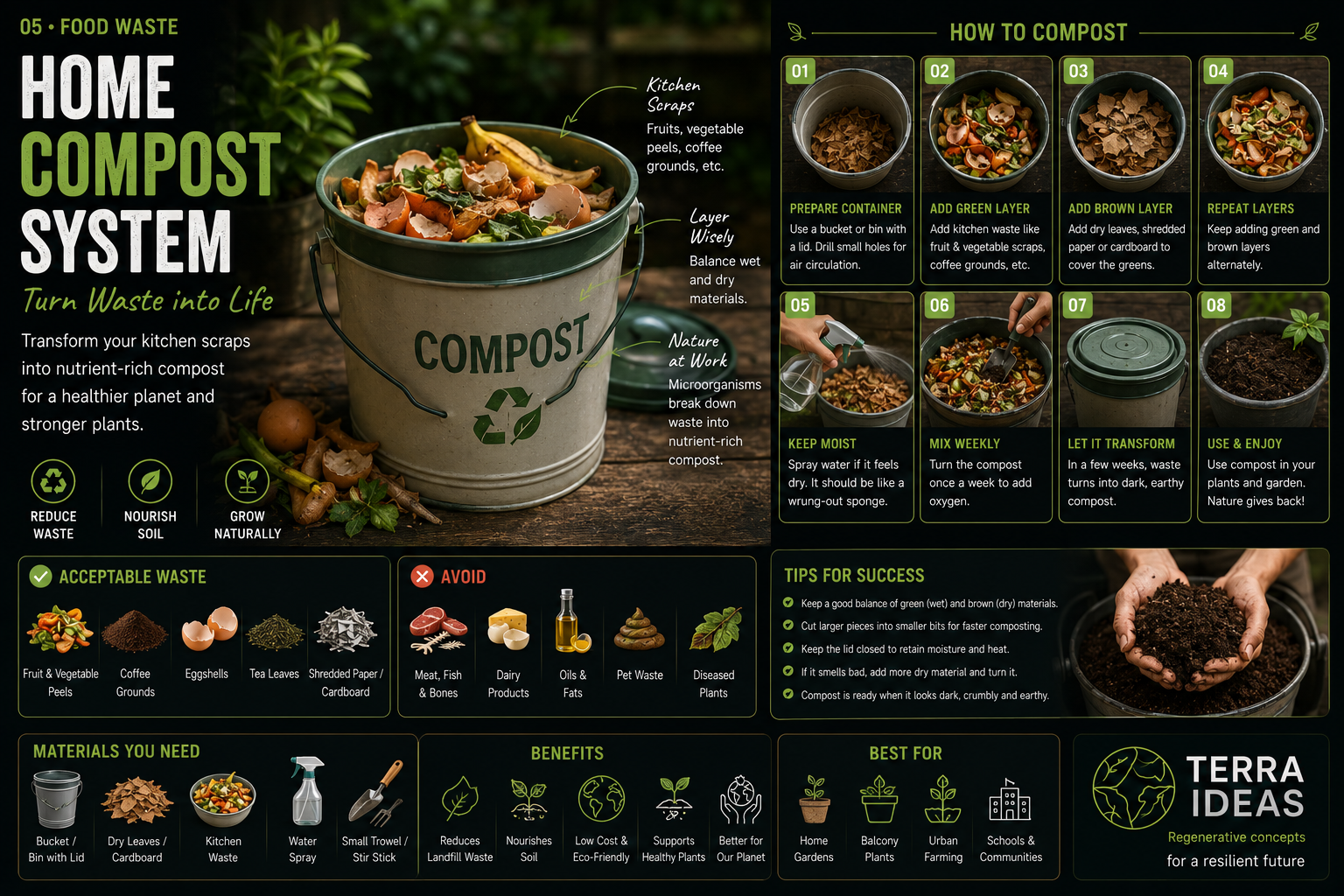
Kitchen waste compost bucket infographic
Project 05

Kitchen waste compost bucket

Transform fruit peels, vegetable scraps, coffee grounds and dry cardboard into soil improver.

assets/terra_recycle_05.png
bucketfood scrapsdry leavescardboardsoil
Recipe
  1. Add dry brown material first.
  2. Add vegetable scraps in thin layers.
  3. Cover each wet layer with dry material.
  4. Mix weekly and keep slightly moist.
  5. Use only after decomposition stabilizes.
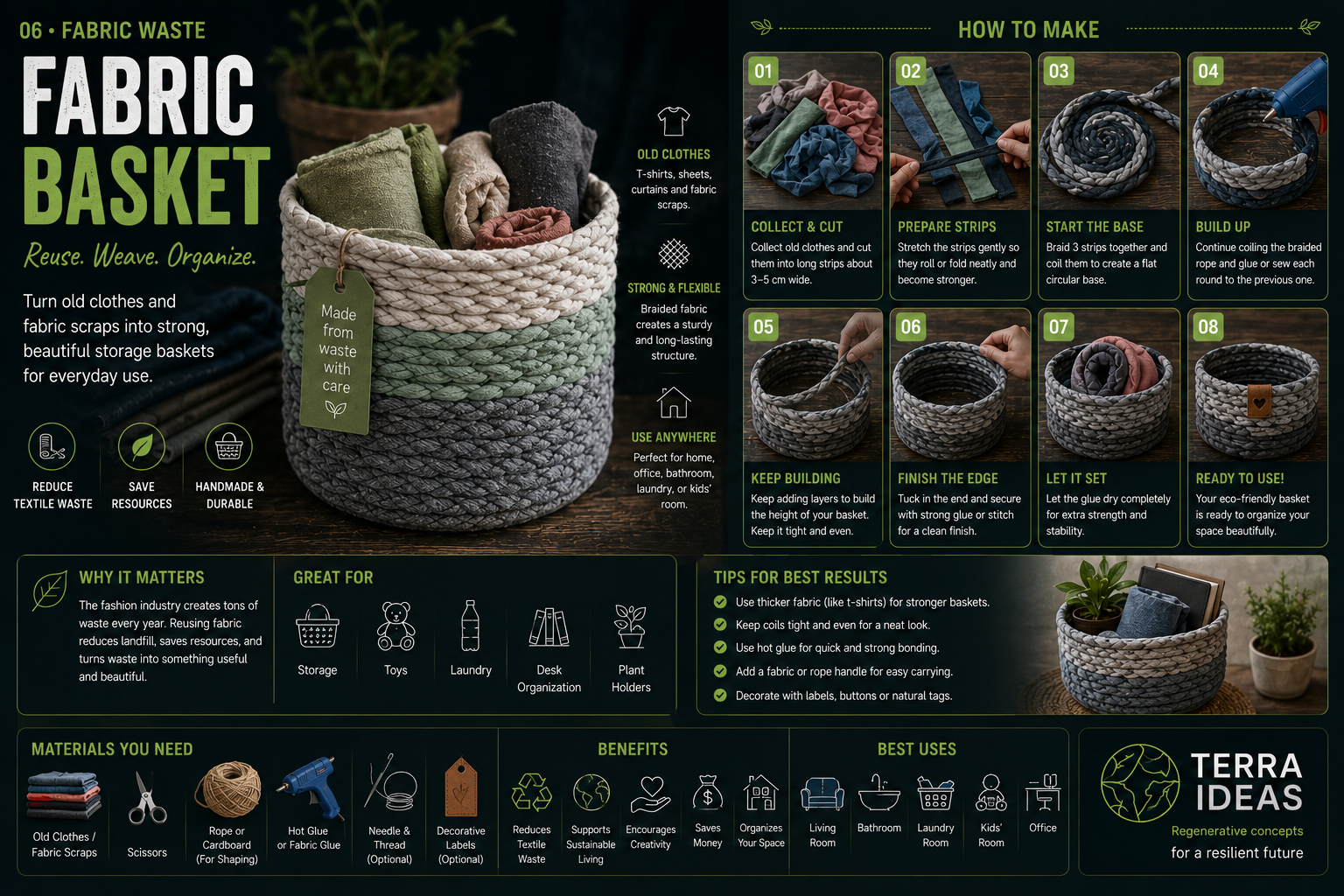
Fabric scrap storage basket infographic
Project 06

Fabric scrap storage basket

Old clothes and textile scraps can become cable organizers, toy baskets or desk storage.

assets/terra_recycle_06.png
old clothesscissorsthreadgluemold
Recipe
  1. Cut textiles into long strips.
  2. Braid or twist them into rope.
  3. Coil around a bowl or cardboard mold.
  4. Stitch or glue each layer.
  5. Let dry before loading with items.
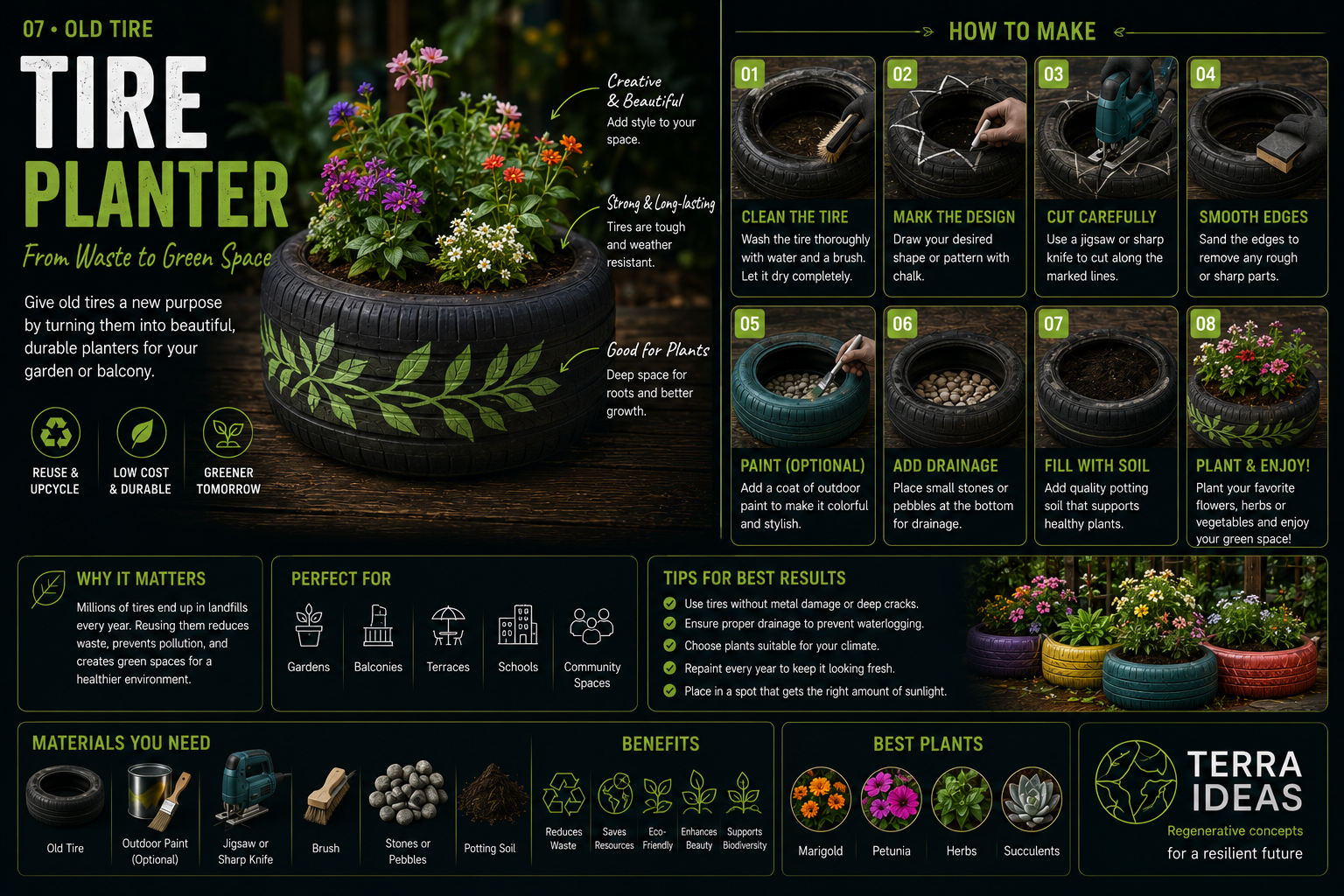
Old tire planter infographic
Project 07

Old tire planter

Give an old tire a second life as a durable planter for gardens, balconies or community spaces.

assets/terra_recycle_07.png
old tirebrushpaint optionalstonespotting soil
Recipe
  1. Clean the tire thoroughly and let it dry.
  2. Mark the desired design if cutting is needed.
  3. Smooth sharp edges carefully.
  4. Add stones or pebbles for drainage.
  5. Fill with soil and plant flowers, herbs or succulents.
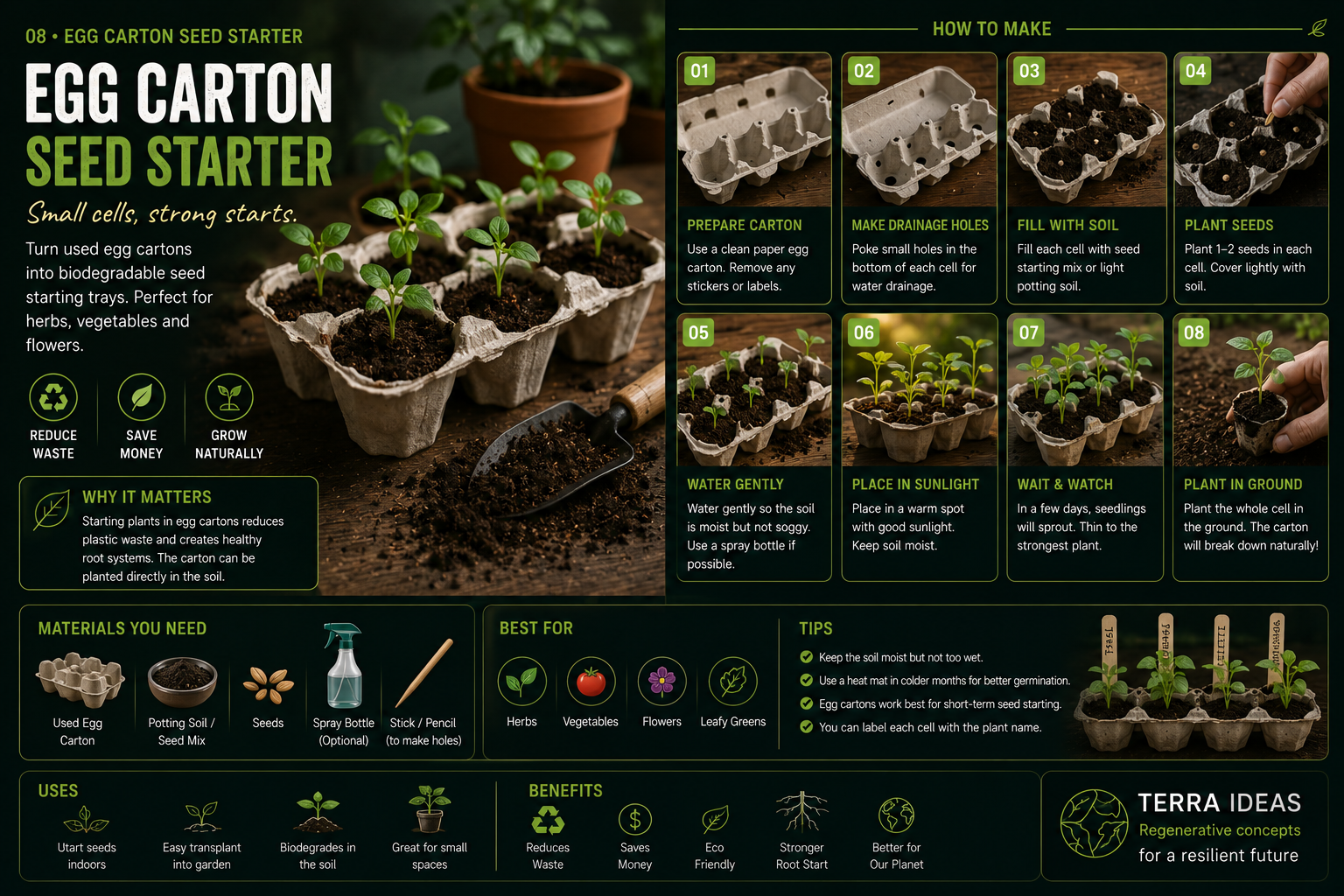
Egg carton seed starter tray infographic
Project 08

Egg carton seed starter

Use paper egg cartons as small biodegradable starter cells for herbs, flowers and balcony vegetables.

assets/terra_recycle_08.png
paper egg cartonseed mixseedsspray bottletray
Recipe
  1. Cut the carton into small seed cells.
  2. Add light seed-starting soil.
  3. Place one or two seeds in each cell.
  4. Mist gently and keep near bright indirect light.
  5. Transplant the full paper cell when seedlings are ready.
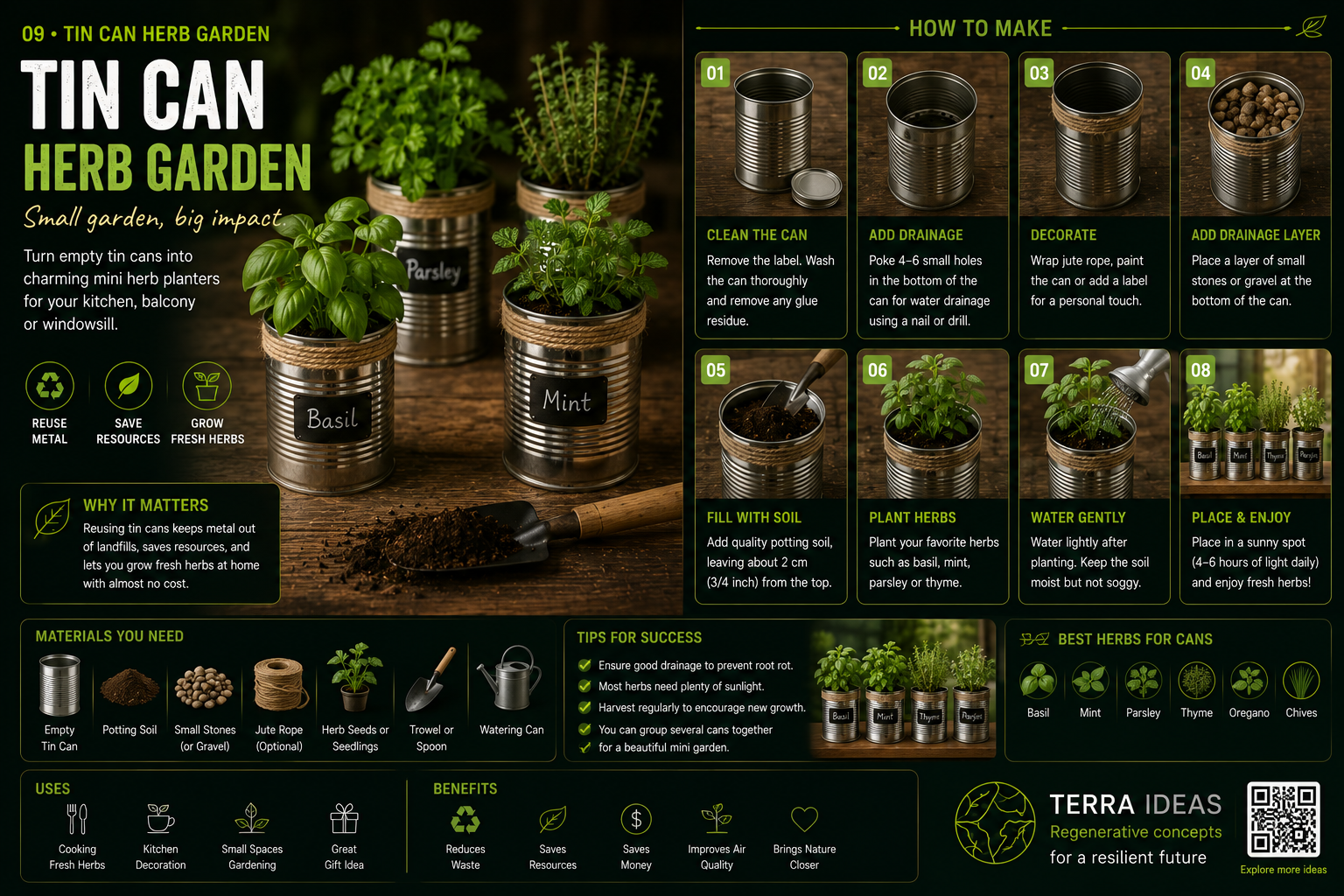
Tin can herb garden infographic
Project 09

Tin can herb garden

Turn cleaned food cans into compact herb planters for windowsills, balconies or kitchen shelves.

assets/terra_recycle_09.png
empty canssmall stonespotting soilherb seedspaint optional
Recipe
  1. Wash cans thoroughly and remove sharp edges.
  2. Add drainage holes or a pebble layer.
  3. Fill with potting soil.
  4. Plant basil, mint, parsley or similar herbs.
  5. Place near light and water moderately.
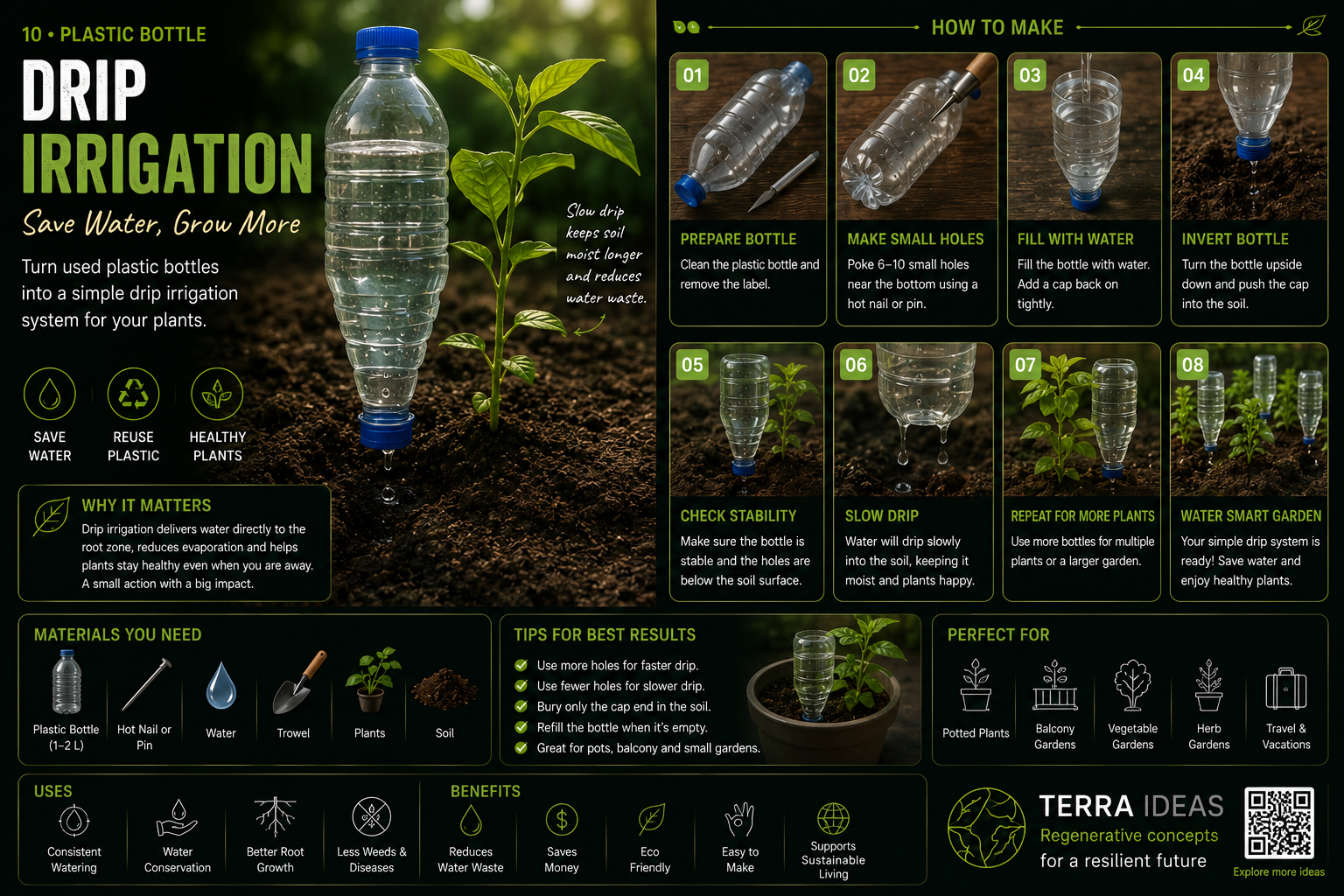
Plastic bottle drip irrigation infographic
Project 10

Plastic bottle drip irrigation

Create a slow-release watering aid for garden beds, balcony pots or short travel periods.

assets/terra_recycle_10.png
PET bottlepin or nailwatersoilplant pot
Recipe
  1. Clean a plastic bottle and keep the cap.
  2. Make tiny holes in the cap or lower side.
  3. Fill the bottle with water.
  4. Place it upside down or partially buried near roots.
  5. Adjust hole size after testing the drip rate.
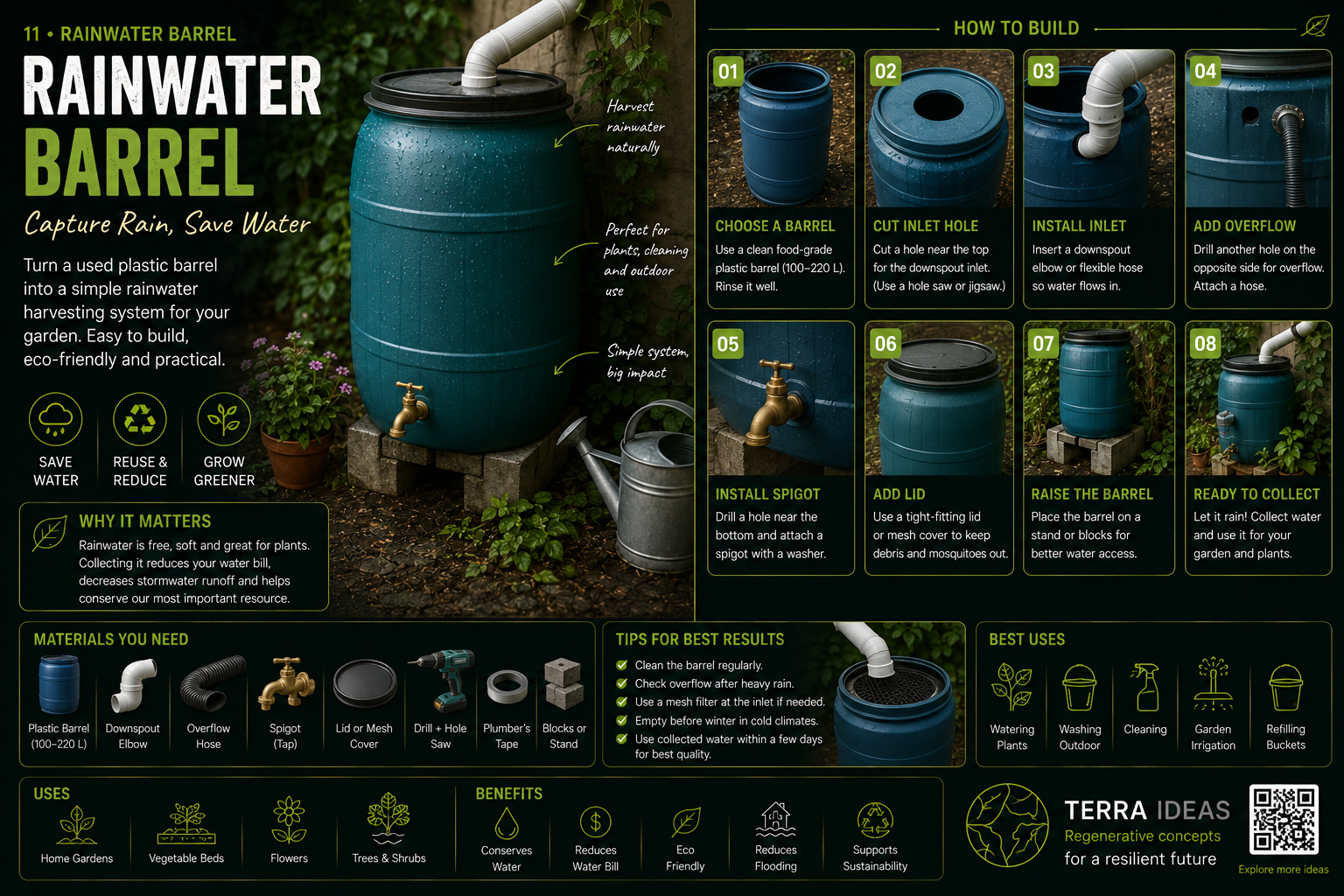
Rainwater barrel harvesting system infographic
Project 11

Rainwater barrel

Collect roof runoff in a reused barrel for garden watering, outdoor cleaning and low-cost water awareness.

assets/terra_recycle_11.png
plastic barreldownspout elbowoverflow hosespigotmesh lid
Recipe
  1. Choose a clean food-grade barrel.
  2. Cut an inlet hole near the top.
  3. Attach the downspout elbow or hose.
  4. Add an overflow outlet and a low spigot.
  5. Keep covered with a lid or mesh and use for non-drinking garden water.
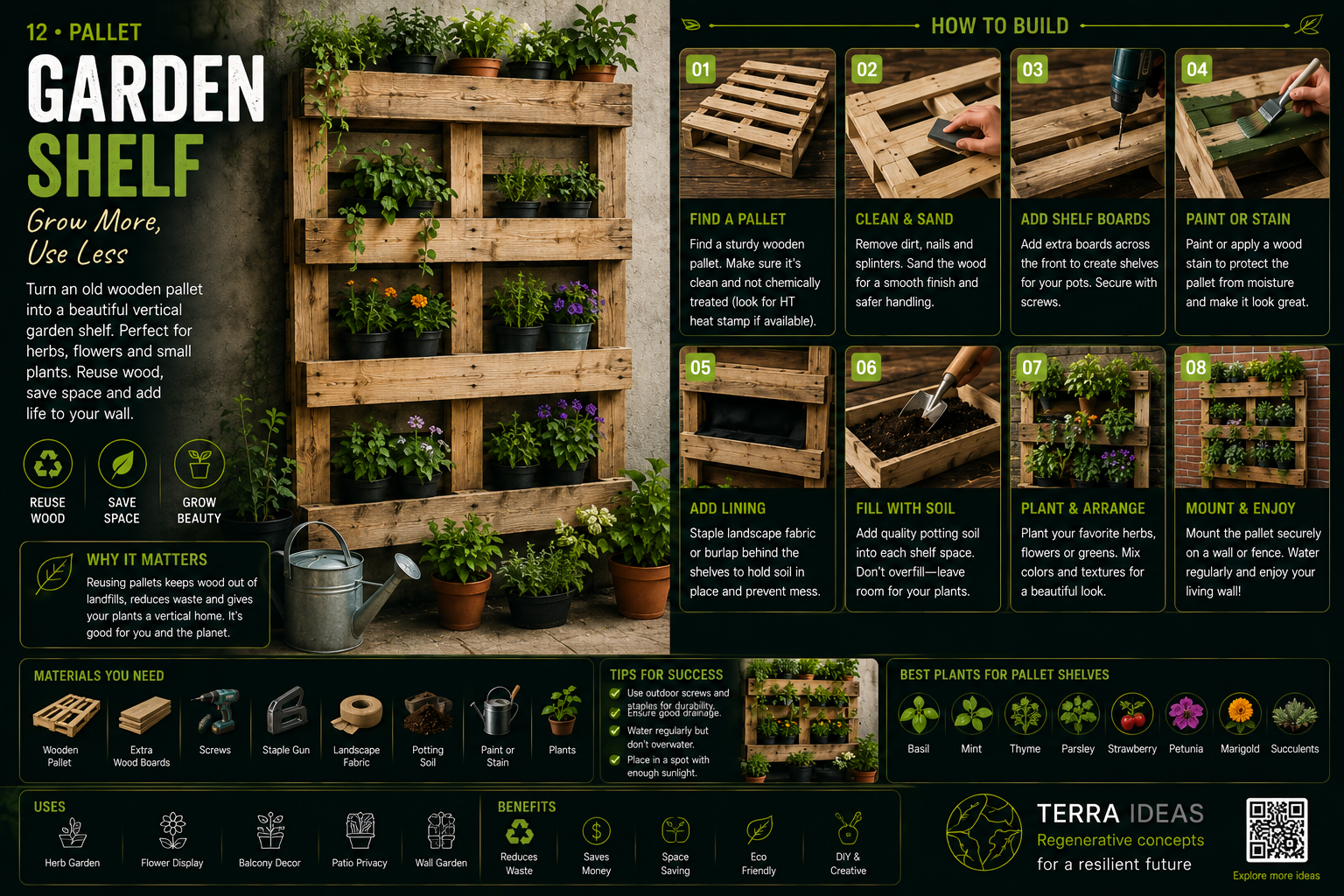
Pallet garden shelf infographic
Project 12

Pallet garden shelf

Reuse a clean wooden pallet as a vertical shelf for small planters, tools and balcony garden supplies.

assets/terra_recycle_12.png
wood palletsandpaperpaint optionalhookssmall pots
Recipe
  1. Select a clean, untreated pallet.
  2. Sand rough surfaces and remove loose nails.
  3. Seal or paint if it will stay outdoors.
  4. Attach hooks, small shelves or pot holders.
  5. Fix securely against a wall before loading.
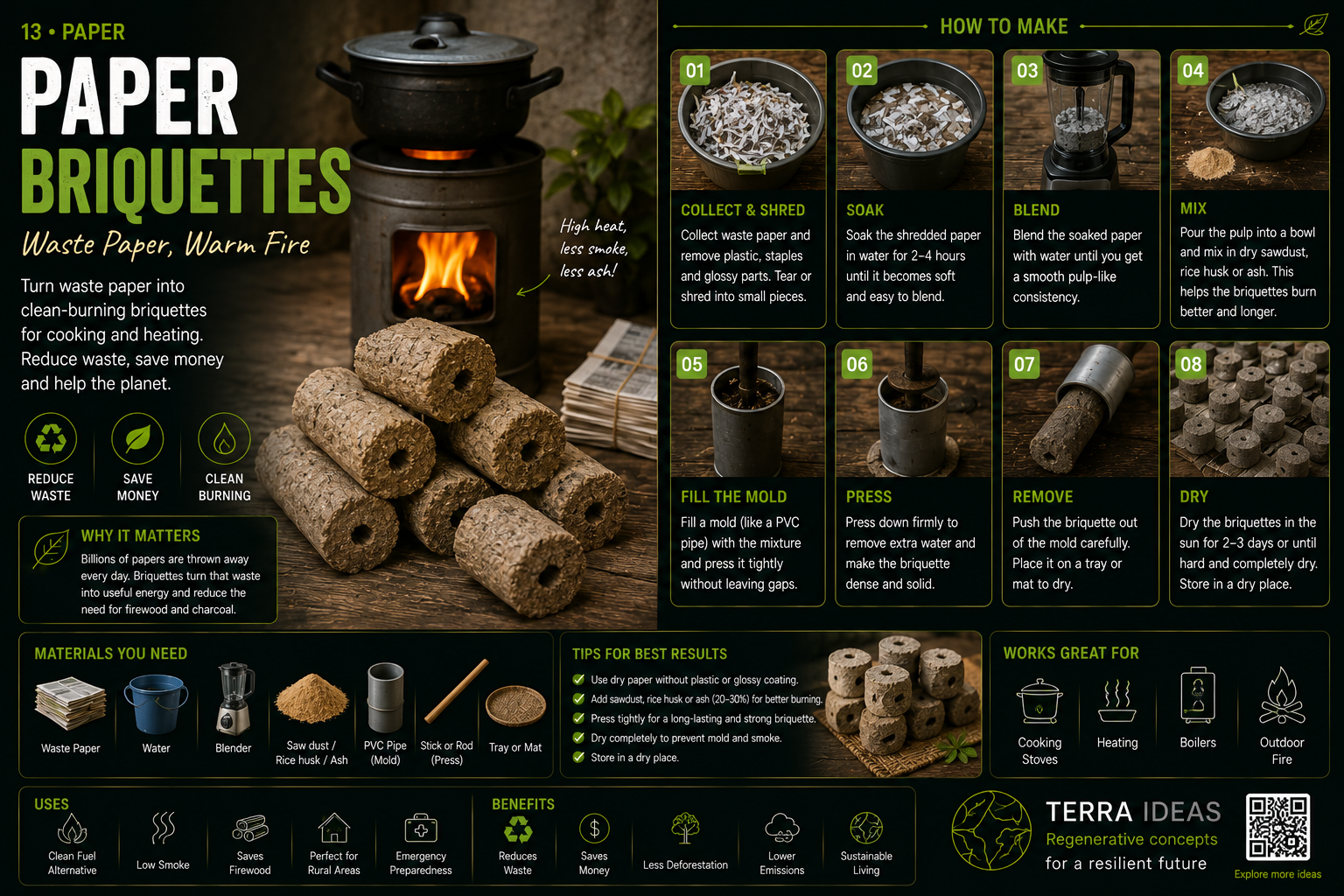
Paper briquettes from waste paper infographic
Project 13

Paper briquettes

Compress soaked waste paper into dense drying blocks for outdoor stove demonstrations and emergency fuel education.

assets/terra_recycle_13.png
waste paperwaterbucketpress molddrying rack
Recipe
  1. Tear waste paper into small pieces.
  2. Soak until the fibers soften.
  3. Knead or blend into thick pulp.
  4. Press strongly to remove water and shape blocks.
  5. Dry completely outdoors before any controlled outdoor test.
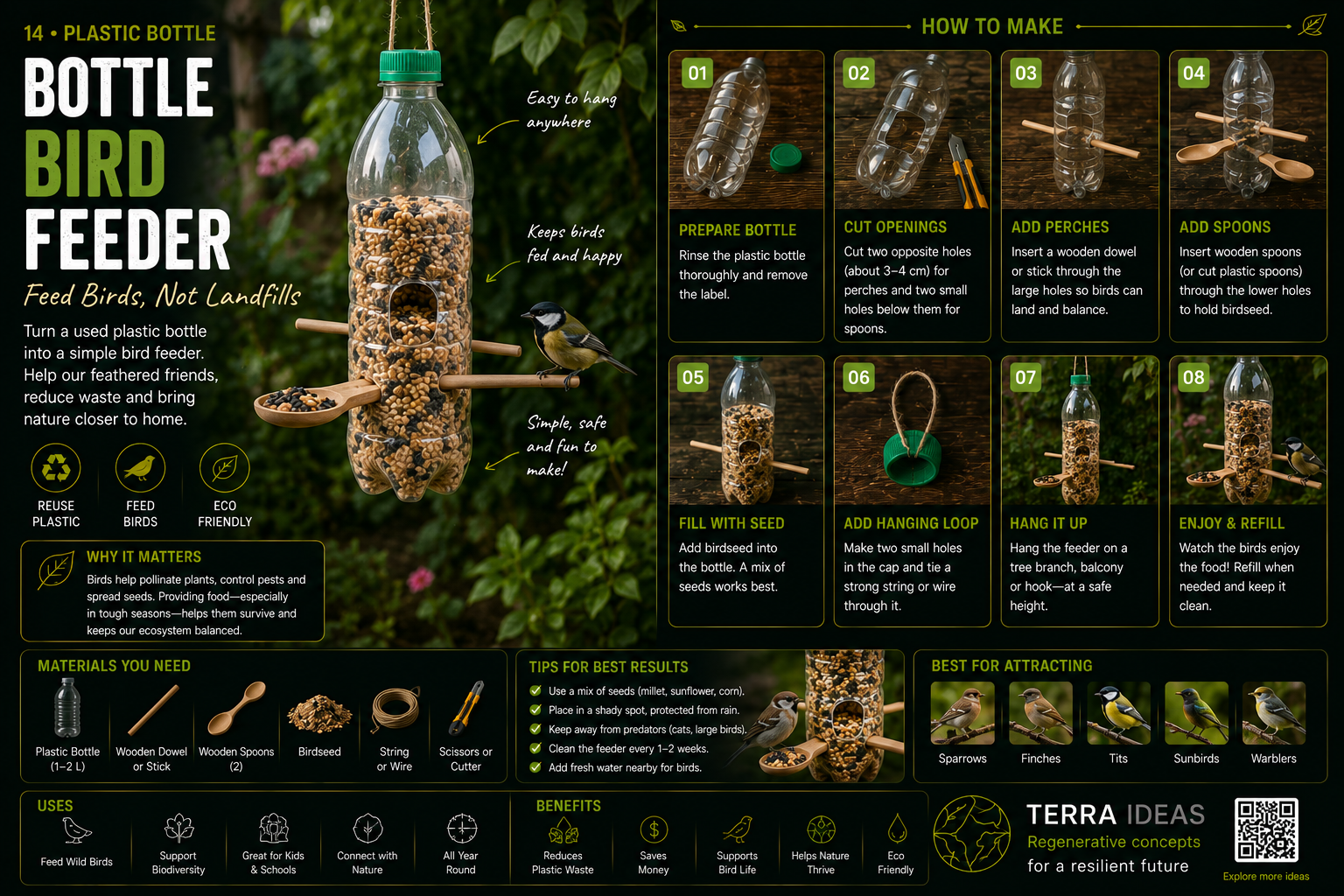
Plastic bottle bird feeder infographic
Project 14

Plastic bottle bird feeder

Turn a small bottle into a simple seed feeder for gardens, balconies or school nature projects.

assets/terra_recycle_14.png
small bottlewooden spoonsstringbird seedcutter
Recipe
  1. Clean and dry the bottle.
  2. Cut small feeding holes near the lower side.
  3. Insert wooden spoons or sticks as perches.
  4. Fill with suitable bird seed.
  5. Hang securely and clean regularly.
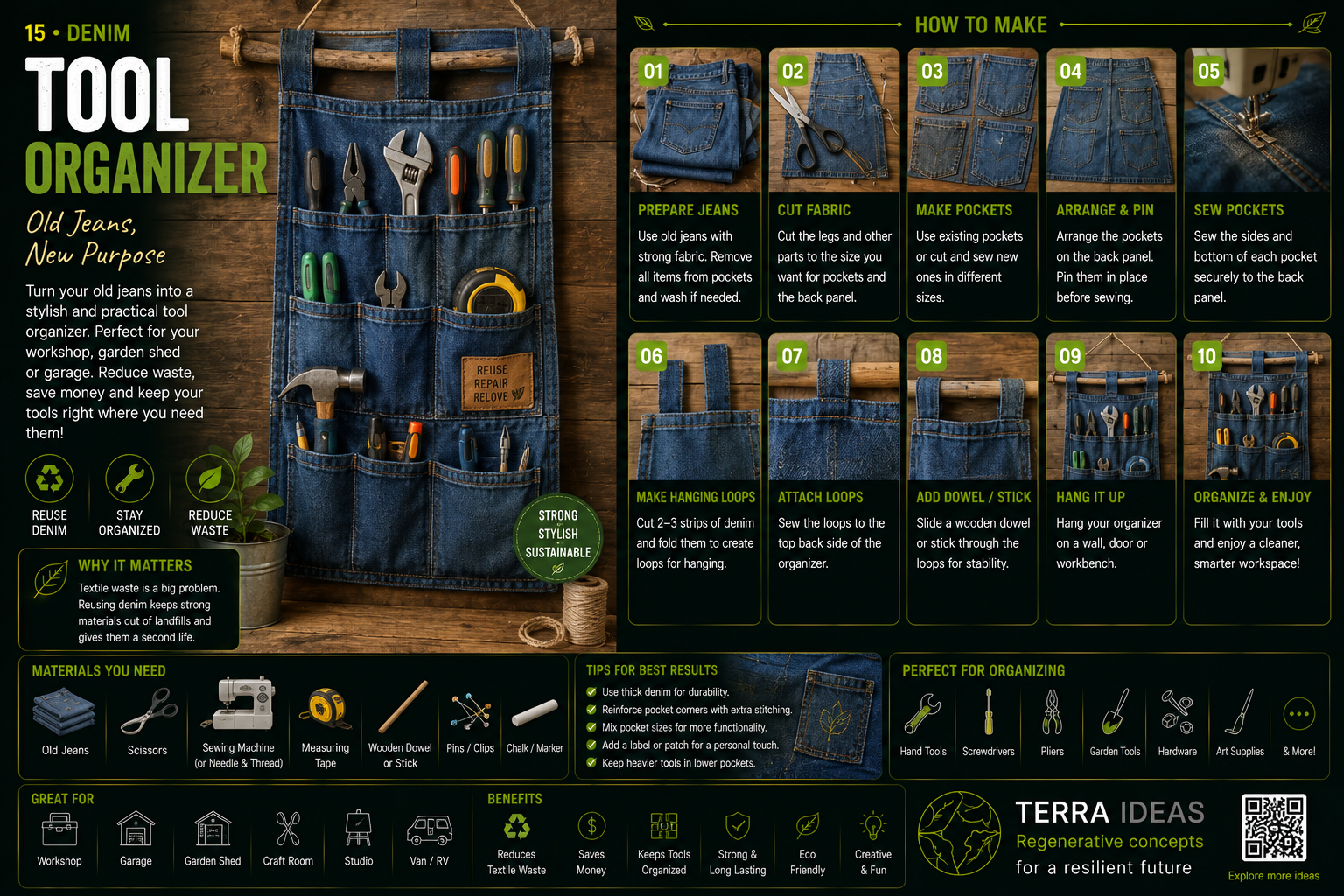
Denim tool organizer from old jeans infographic
Project 15

Denim tool organizer

Reuse old jeans as a wall pocket organizer for tools, craft supplies, cables or school materials.

assets/terra_recycle_15.png
old jeansscissorsneedle/threadwood dowelstring
Recipe
  1. Cut usable pocket sections from old denim.
  2. Trim into a neat rectangular backing panel.
  3. Sew or glue pockets onto the panel.
  4. Add a top dowel, hanger or reinforced loops.
  5. Mount on a wall and sort lightweight tools or supplies.
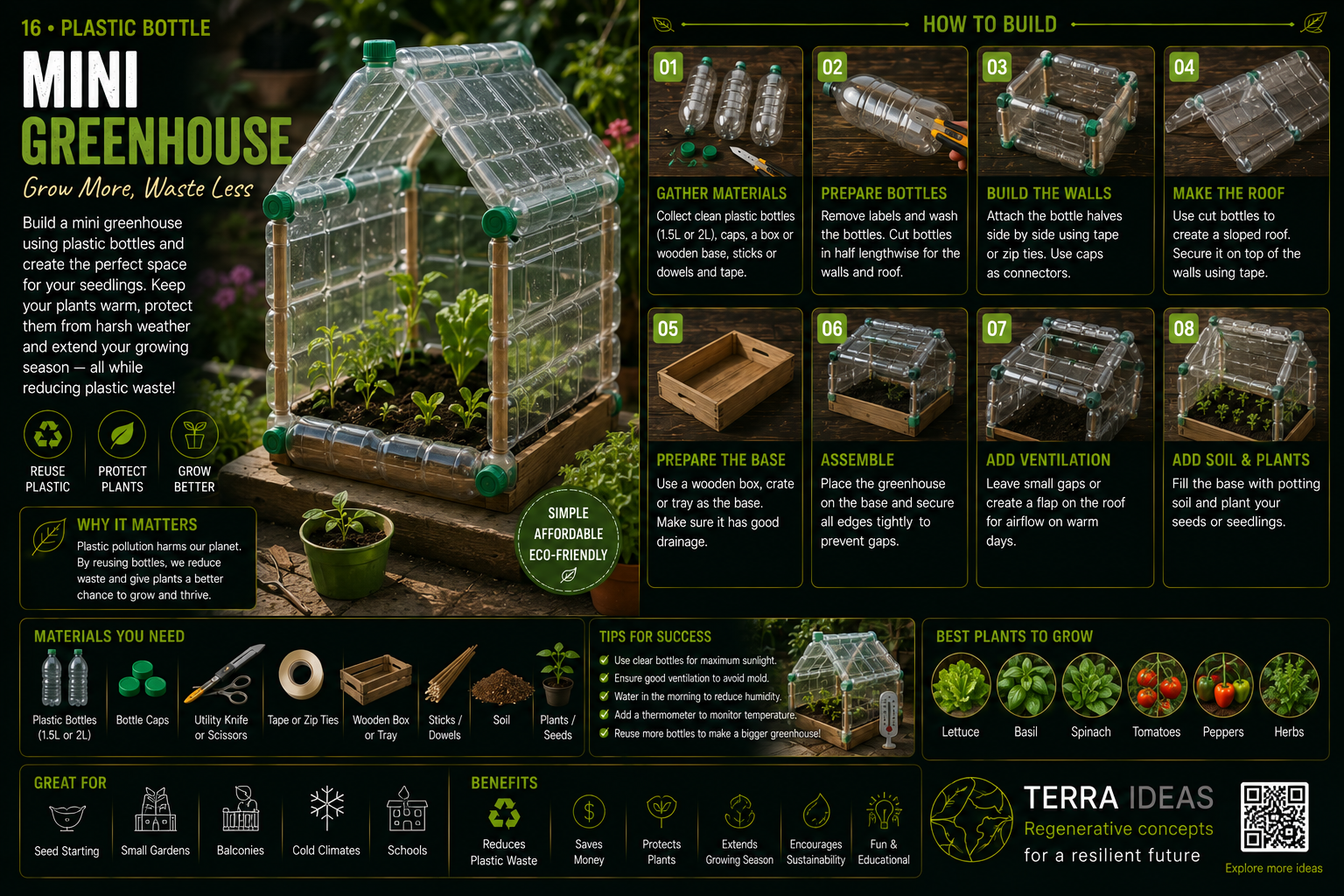
Plastic bottle mini greenhouse infographic
Project 16

Plastic bottle mini greenhouse

Turn clear bottles into small protective domes for seedlings, herbs and early-season garden starts.

assets/terra_recycle_16.png
clear PET bottlescutterseedlingssoillabels
Recipe
  1. Clean clear bottles and remove labels.
  2. Cut off the bottom to create a dome.
  3. Place over seedlings in pots or garden beds.
  4. Open the cap for ventilation on warm days.
  5. Remove when plants grow stronger or temperatures rise.
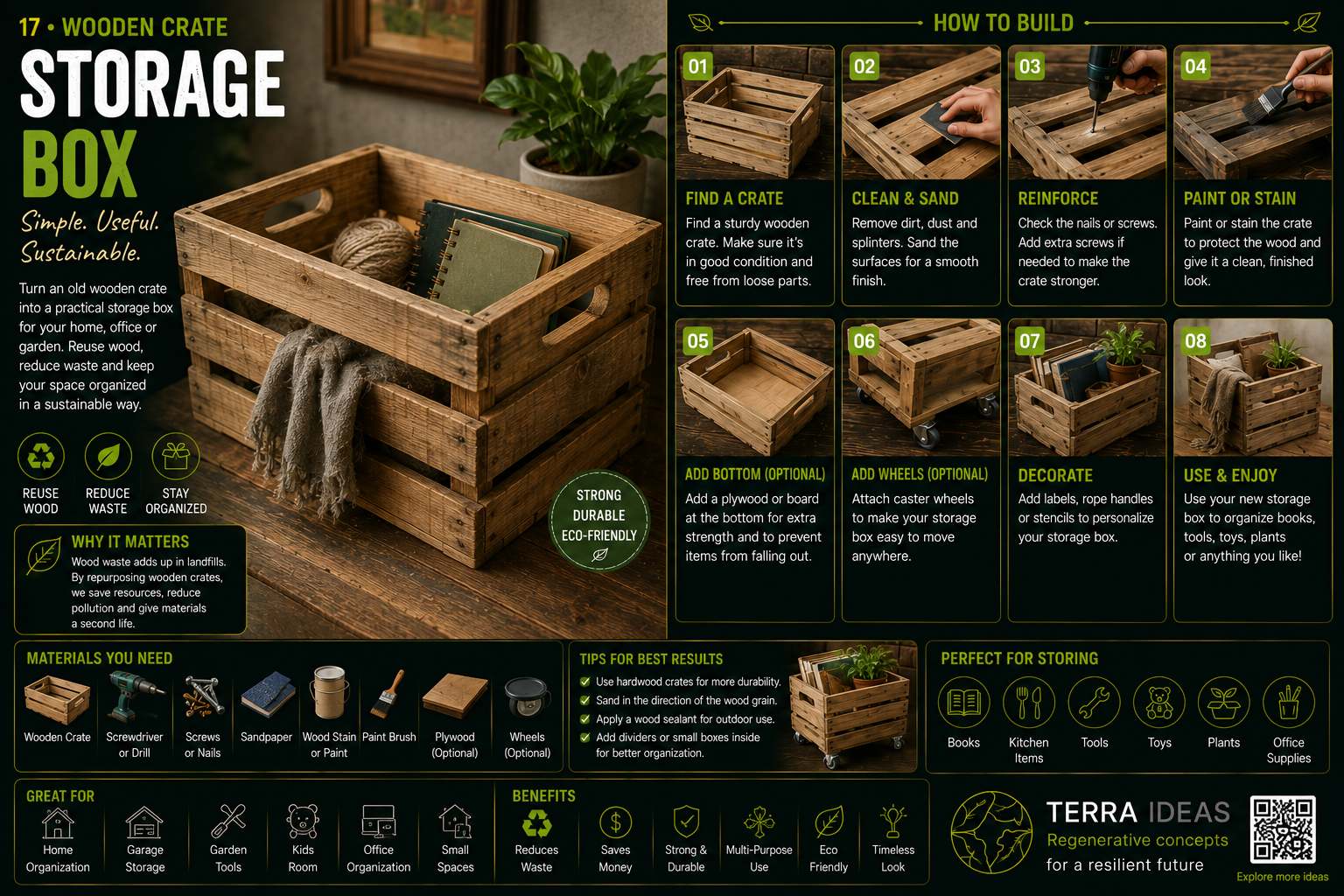
Wooden crate storage box infographic
Project 17

Wooden crate storage box

Convert fruit crates into stackable storage for books, pantry goods, garden tools or toys.

assets/terra_recycle_17.png
wooden cratesandpaperscrewspaint optionalfelt pads
Recipe
  1. Choose a clean, sturdy crate.
  2. Sand splinters and rough edges.
  3. Reinforce weak corners with small screws.
  4. Paint, stain or label if desired.
  5. Stack safely or add felt pads for floor protection.
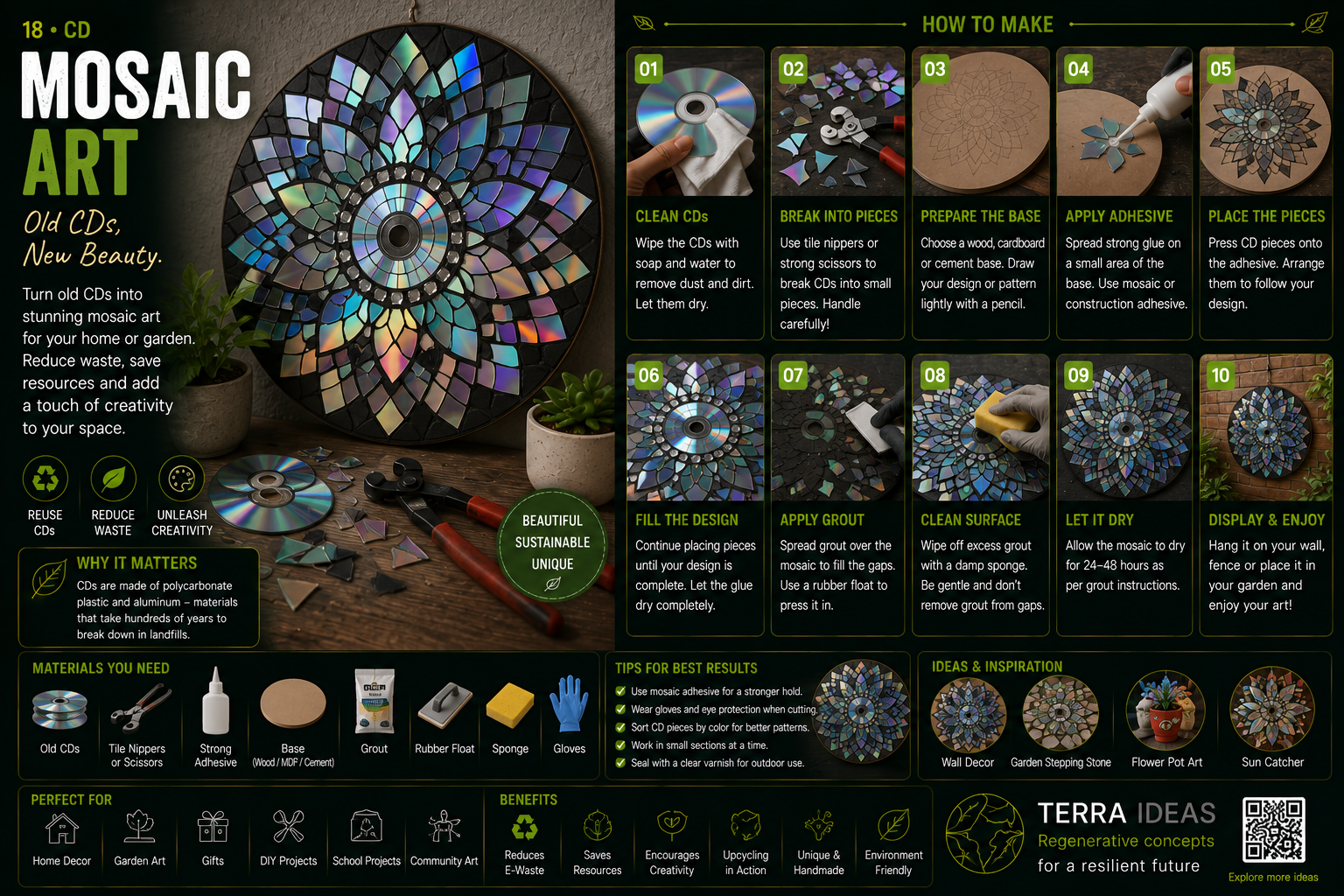
CD mosaic art from old discs infographic
Project 18

CD mosaic art

Use old CDs or DVDs as reflective mosaic pieces for planters, frames or decorative panels.

assets/terra_recycle_18.png
old CDsscissorsgluebase boardgloves
Recipe
  1. Cut discs into small mosaic pieces carefully.
  2. Arrange pieces on a board, pot or frame.
  3. Glue pieces down with small gaps between them.
  4. Let the surface dry completely.
  5. Seal if the item will be handled often.
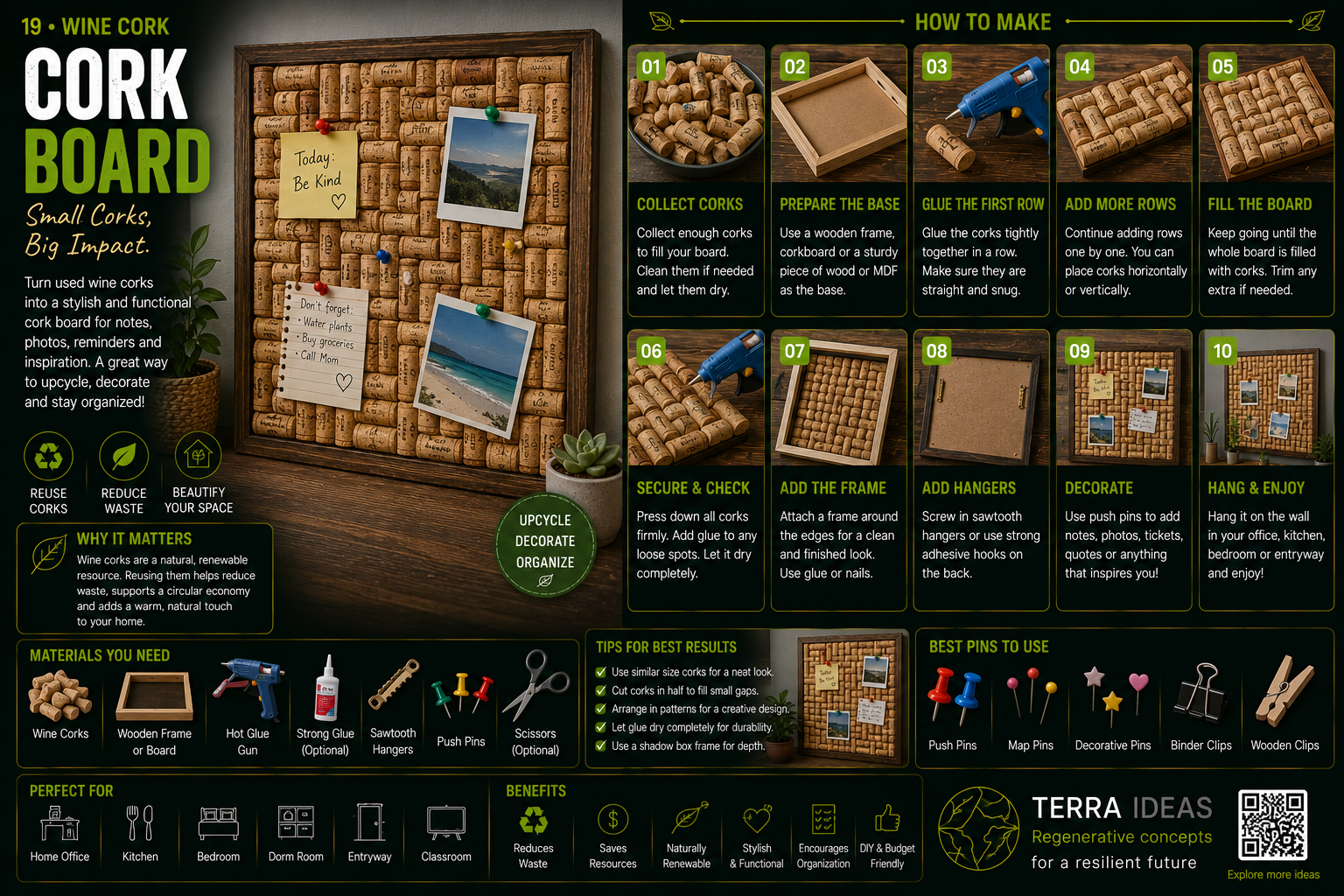
Wine cork notice board infographic
Project 19

Wine cork notice board

Turn collected corks into a small pin board for notes, seed packets, recipes or desk reminders.

assets/terra_recycle_19.png
wine corksframestrong glueknifebacking board
Recipe
  1. Collect enough clean corks for the frame.
  2. Cut corks in half lengthwise if needed.
  3. Arrange the pattern on a backing board.
  4. Glue corks tightly in place.
  5. Let dry before using with pins or labels.
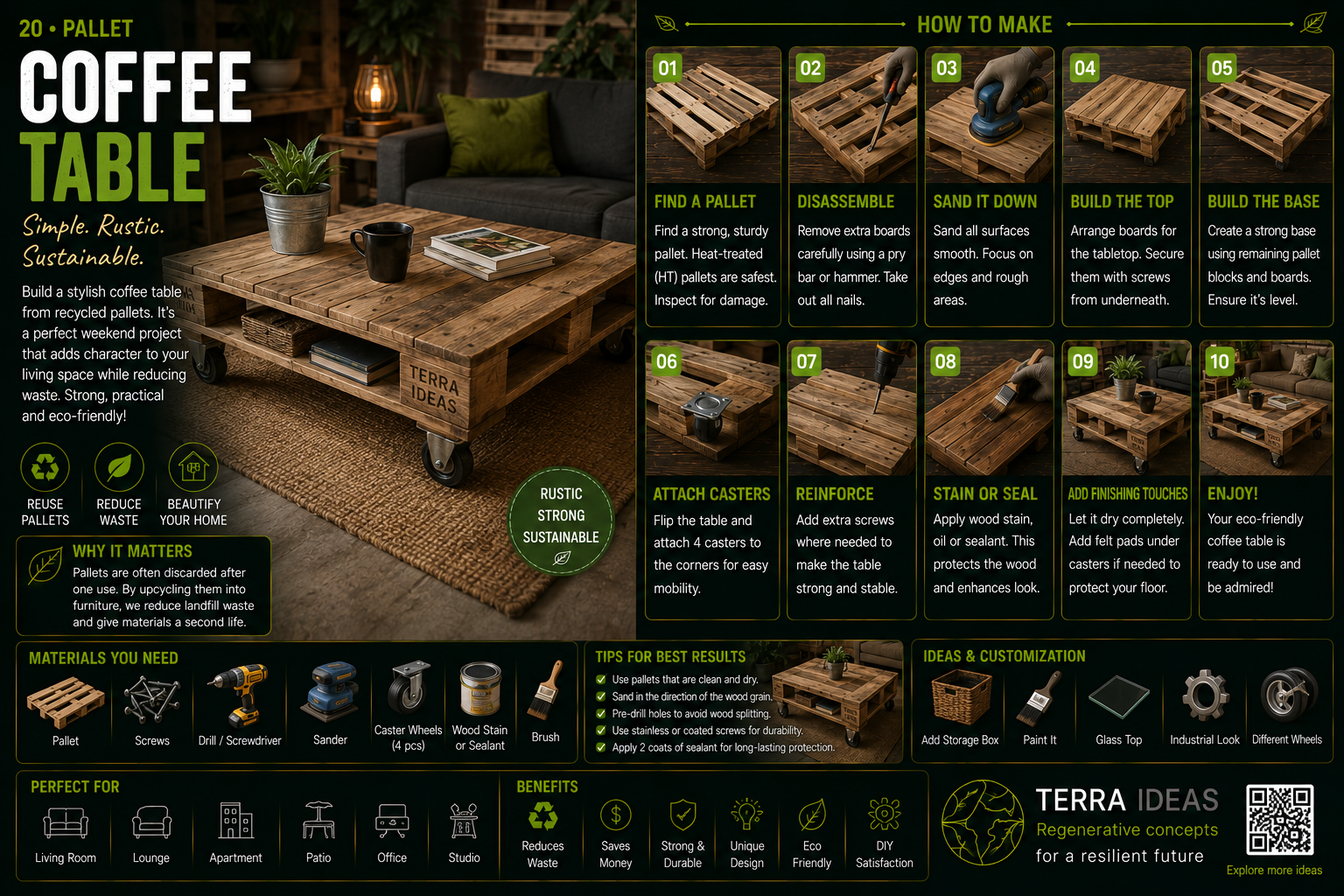
Pallet coffee table infographic
Project 20

Pallet coffee table

Build a low-cost coffee table from a clean pallet for a patio, workshop corner or casual living space.

assets/terra_recycle_20.png
wood palletsandpaperscrewscaster wheels optionalwood finish
Recipe
  1. Select a clean, untreated pallet.
  2. Sand all surfaces and remove loose nails.
  3. Add support boards if the pallet is weak.
  4. Attach legs or caster wheels if desired.
  5. Seal the wood and test stability before use.
Design note

How to choose the next project

Start with the material you throw away most often. Paper, cardboard, bottle, can, cork and denim projects are easiest; compost needs hygiene and placement; stove and briquette demos require outdoor safety; tire, pallet, crate and barrel projects require careful cleaning, stability and drainage.

Safety priority: Avoid pressure vessels, sealed heating containers, indoor combustion, untreated drinking water and composting meat/oil/dairy in small home systems.
References & attribution

Do we need references?

Yes, but the reference style can stay lightweight. For Terra Ideas, the page should clearly separate home craft instructions from validated engineering claims. General upcycling recipes do not need academic citations for every step, but safety-related topics should point readers toward public guidance.

Suggested reference types

  • Municipal recycling and waste-sorting guidance.
  • University extension or public-agency composting guidance.
  • Public composting and hygiene guidance.
  • Fire-safety guidance for any outdoor stove demonstration.
  • Visual attribution only when external photos or diagrams are used.

Original Terra Ideas visuals do not require third-party image credit. If we later use web photos, each image needs license verification and attribution.